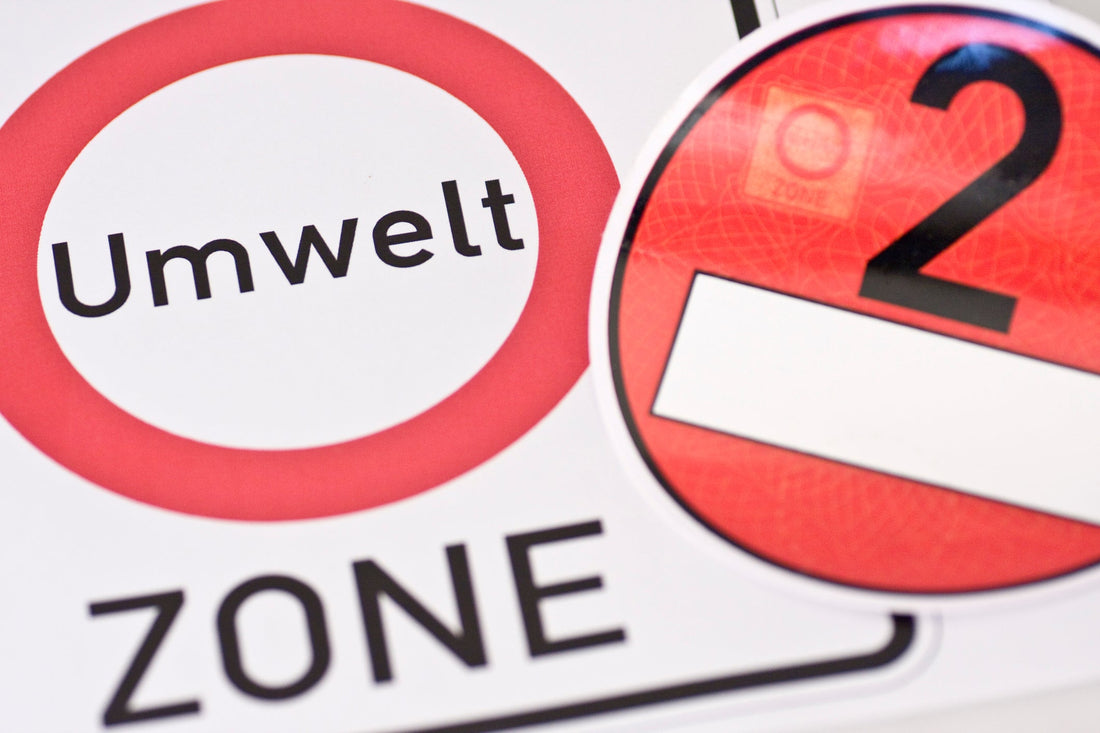
Which environmental sticker do you need in Germany?
Deel
In Germany, driving in so-called environmental zones ("Umweltzonen") is only permitted with a valid environmental sticker, also known as a "Feinstaubplakette." The type of environmental sticker you need in Germany depends on the vehicle type and its emissions class ("emission class"). This requirement applies to all vehicles, regardless of their country of registration – including Dutch cars, campers, and commercial vehicles. The aim of this system is to improve air quality in urban areas by banning high-emission vehicles from environmentally sensitive zones.
Most low-emission zones in Germany only recognize the green environmental sticker (Schadstoffgruppe 4). This sticker is issued for vehicles that meet sufficiently strict emissions standards: usually Euro 1 or higher for petrol cars, and Euro 4 or higher for diesel vehicles. Older yellow or red stickers are no longer valid. Without the correct sticker, you risk a fine of at least 80 euros (as of 2025).
Why are there different environmental stickers in Germany?
The German environmental sticker system was introduced to improve air quality , particularly in large cities and busy traffic areas. The goal is to reduce particulate matter and nitrogen oxides, which are harmful to health.
The rules apply to all vehicles entering an environmental zone , regardless of whether they are registered in Germany or abroad. Therefore, tourists, business travelers, and rental car users must also check in advance which sticker is required for Germany.
What types of environmental stickers are there?
In Germany, there are four versions of the environmental sticker, but in practice, only one of them is relevant:
- Green environmental sticker: The standard sticker for most petrol cars, diesel vehicles with Euro 4, 5, or 6, and electric vehicles. This sticker is placed on the inside of the windshield.
- Blue E-sticker (optional): Specifically for fully electric vehicles and subsidy-eligible plug-in hybrids registered abroad, such as in the Netherlands. With the E-sticker, you can enjoy additional privileges in some cities, such as free parking or access to bus lanes. However, the green sticker remains mandatory.
- Yellow and red stickers: These were intended for vehicles with older emissions standards. They no longer grant access to low-emission zones in Germany ; only the green sticker remains valid.
Which environmental sticker does your vehicle need?
The required sticker depends on the engine type, emission class, and year of manufacture of the vehicle. Below is an overview:
- Electric cars (BEV) : Green sticker + optional blue E-plaque for Germany .
- Petrol cars : Green sticker from Euro 1, in practice mainly relevant from Euro 3 or later.
- Diesel vehicles : Green sticker from Euro 4 (usually model years from 2006/2007).
- Campers and motorhomes : The same rules apply as for passenger cars, depending on the emission class.
You can easily find the emission class in the Dutch vehicle registration certificate ("Kentekenbewijs Deel 1") under the technical data. This often lists "Emission Class" or the Euro standard directly. This information is essential for determining which environmental sticker your car needs for Germany.
Examples: the correct environmental sticker per vehicle type
Here are some common scenarios:
Example 1: Family car, petrol, Euro 5
→ Green environmental sticker.
Example 2: Diesel car, built in 2004, Euro 3
→ No valid sticker for environmental zones available.
Example 3: Electric lease car from the Netherlands
→ Green environmental sticker + optional blue E-sticker.
Example 4: Plug-in hybrid with petrol engine, Euro 6
→ Green environmental sticker; the blue E-sticker is optional.
Common mistakes when choosing an environmental sticker
To avoid problems, please note the following points:
- Confusion between the standard green sticker and the optional blue E-sticker: The green sticker is mandatory, the blue one is only an extra.
- Incorrect emission class specified: Check the registration certificate carefully before applying for the sticker.
- Entering the low-emission zone without a sticker: Even a short drive without a sticker is subject to a fine. The standard fine is at least 80 euros.
What color environmental sticker is required for Germany?
The green sticker for Germany is mandatory in almost all low-emission zones. Yellow and red stickers are still formally available, but no longer grant access. Anyone unsure about which color of environmental sticker is required for their vehicle in Germany can check the emission class and compare it with the requirements for Schadstoffgruppe 4.
Easily order the correct environmental sticker for Germany
If you want to be sure which vignette you need for Germany , you can check it online based on your emission class. Ordering is easy:
- Check the emission class on your registration certificate.
- Please fill in the details on the online application form.
- Receive your sticker by mail and attach it to the inside of the windshield.
Through reliable suppliers like Duitse-Milieusticker.nl, you benefit from fast delivery and support with any questions. This way, you're assured of the right sticker before you leave.
FAQ: Which environmental sticker for Germany?
Does the environmental sticker also apply to Dutch vehicles?
Yes. All vehicles, regardless of their country of registration, require a valid sticker to enter low-emission zones in Germany.
Can I drive through Germany without a sticker?
On highways, this is usually no problem, but in cities with low-emission zones, you risk a fine. Check beforehand whether your destination is within a low-emission zone.
How long is the sticker valid?
The sticker is linked to your vehicle and remains valid as long as the emission class and license plate do not change.
